
“Your Faders Are Too Expensive!”
Tell me something I haven’t heard before.
There’s a guy selling units on AliExpress for around $70 for four fader units.
How the actual F do I have the balls to charge so much for mine?
Good question.
This takes us back to the beginning, when I started out making a fader unit for myself. Not to sell to anyone, for myself. I needed a high quality fader unit for my own music making, but I wasn’t happy with the offerings I found. They were either too complicated, too expensive for my needs, or didn’t look like they would be easy to use.
So I decided to make my own unit, and the first thing I needed was…
The Fader Components
I quickly discovered there was a variety of fader components out there, and settled on some decent Japanese Alps faders.
But they aren’t cheap. You can get similar looking fader components for much less. But they aren’t the same quality.
I thought it might be useful to show you what a set of 4 Japanese Alps faders cost as of July 23, 2026:
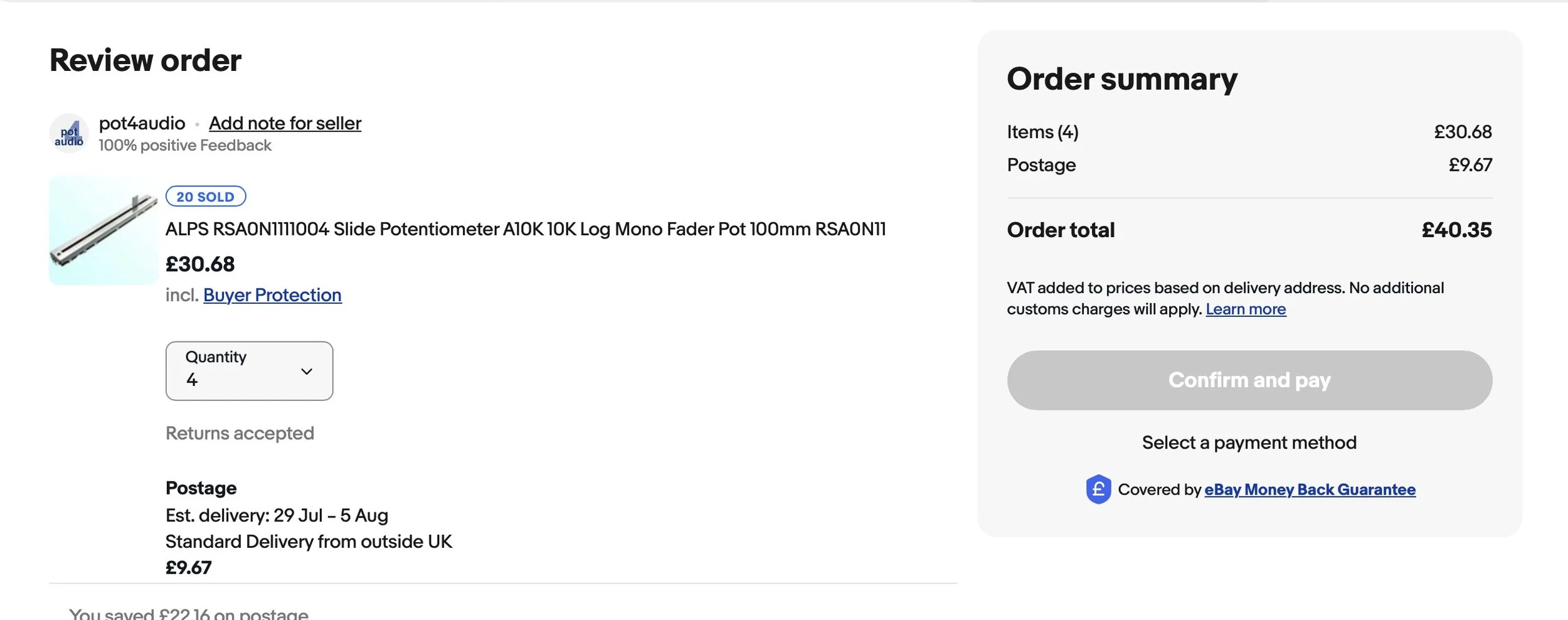
Converting this to dollars: $53.84
That’s just the cost for the fader components themselves, not even including import duties on them, or anything else! Just a set of four faders staring back at you, doing nothing.
As you can see, the guy selling $70 faders off AliExpress isn’t using the high quality faders I am using!
Plus, I hand-install special cloth dust covers over each fader, to protect them, and also provide a bit more resistance, which is expensive and time-consuming. But worth it.
Do the Fader Components Really Matter?
Well, if you were a chef making a high end meal, would the cheap cheese you can buy for $1 a pound be any different than the French imported cheese?
Of course! The components matter, a lot. And I didn’t want to cheap out on the main components!
The Japanese Alps faders are made very well, and last a long time, especially with the special dust covers I install over each one. They are designed to last years, instead of months, and remain smooth and decent for a long time. Also, they are replaceable in the future if anything were ever to happen.
What about the Rest of the Cost?
Sure, we are only accounting for maybe $60-$70 cost when you factor in import duties. There’s a big price difference for the rest of the units!
100%.
But I applied my thinking to absolutely every component in my units. So you are getting high end everything. In fact my costs for the Fader Premium unit, the actual component costs themselves, are almost half the cost of the units!
The parts account for half the cost, up front. Not including assembly. Not including the thousands of hours of programming I have done on the units to make them easy and intuitive to use. Not including the many hours spent hand-finishing the wood end bells. Not including the fact I use furniture-grade African Sapele wood instead of cheaper woods that aren’t as nice. Not including ANYTHING else!
The thing that many folks just don’t understand is, when you buy a premium product, generally you get what you pay for. You can always buy a car for a grand that will run for a few months, but do you want to ride like that?
It honestly comes down to, what experience do you want to have with the product?
With higher end products, you get better quality components, better engineering, better attention to detail, better customer service (usually!), and the product is usually easier to use and lasts much longer than the cheap versions.
When I first started selling my units, I sold them for far less. I was constantly busy making units just to stay afloat, and barely had any time for R&D or developing new products. It was an incredible amount of energy and time just to keep things moving, and I was barely making ends meet.
When I did raise my prices, several things happened:
1) I was able to make it viable business. For all the hours and hours I was spending on the business, I suddenly had some breathing room and could afford to take more time for things. And I had the money to buy the high quality components I wanted, plus I was able to pay bills. All win-win.
2) I attracted a higher quality of customer, one who is discerning and caring about their music gear, and who values things made well, with pride, high quality components, and attention to detail. That’s probably you.
3) Since now I sell fewer units, this gave me the time to develop more fader units, such as the upcoming “8-Fader Monster”.
To Summarize…
“When you buy cheap, you buy twice.”
And you really do get what you pay for.
If you want a little more depth on why I am so obsessed with high quality, you can read this blog post here.
Imma go now so I can work on the “8-Fader Monster” development with my engineering partner Jonathan. Thanks for reading.